



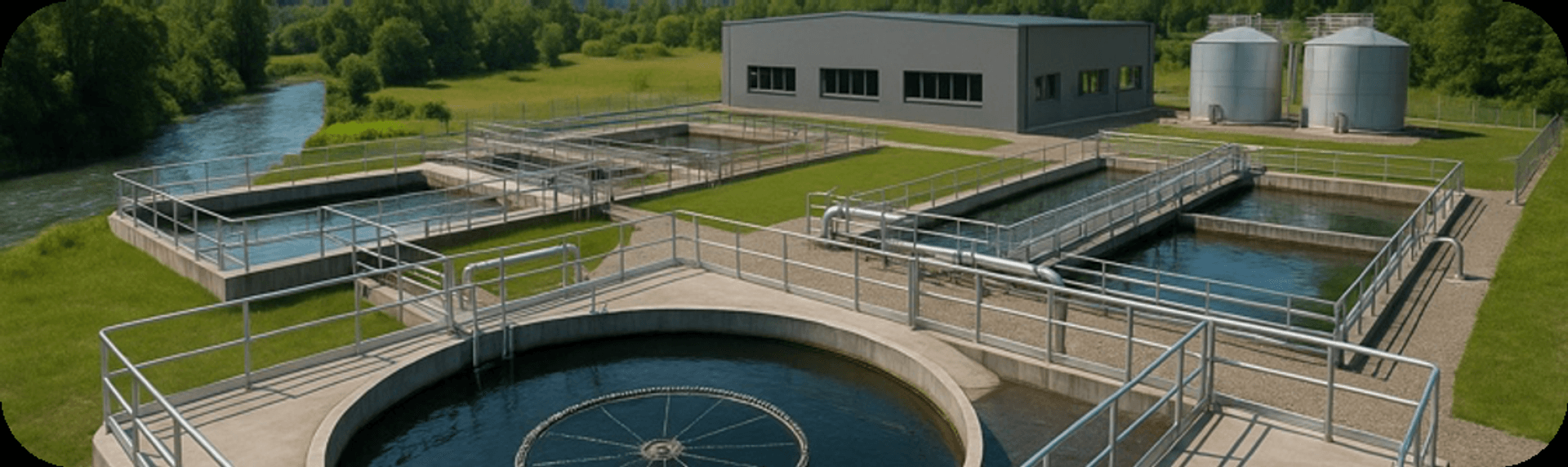
Rapid population and industrial growth in Perechyn (6,500 residents + 1,850 IDPs, + industrial workers) created urgent need to upgrade wastewater infrastructure. Full reconstruction of existing wastewater treatment plant with biological treatment system. Construction of mechanical treatment station, biological reactor, tertiary treatment, sludge dewatering, and blower station. Projected capacity: up to 1,000 m³/day using aerobic technology. Cleaned water to be discharged into Uzh River; stabilized sludge sent for composting.
Reconstruction of the wastewater treatment plant in the city of Perechyn
Full reconstruction of wastewater treatment plant with biological treatment system, capacity up to 1,000 m³/day
€1.3 million
Project Cost
10,000+ people
Beneficiaries
Western Region
Region
Back to Catalog
About Project
About Community
Located in Western Ukraine at the foothills of the Carpathians, the Perechyn urban community includes the town of Perechyn and four villages. Its location near the Slovak and Hungarian borders offers strong potential for cross-border cooperation, logistics, and tourism. With a population of over 14,000, Perechyn has sheltered 1,860 internally displaced persons (IDPs) since the start of the full-scale war. Since 2023, the "Friendly Wind Technology" Industrial Park has served as a relocation hub for industries from frontline regions, such as Kramatorsk. The community is becoming a leader in wind energy in Ukraine and Eastern Europe, hosting a unique full-cycle wind turbine production facility.
General Information
Expected effect after project implementation: Reconstruction of the wastewater treatment system in Perechyn will: Ensure safe and uninterrupted treatment of up to 1,000 m³ of wastewater daily; Prevent pollution of the Uzh River and surrounding environment; Improve public health and reduce risks of waterborne disease outbreaks; Support the growth of the industrial park and new residential zones; Serve the needs of over 10,000 current and future residents and workers; Enable reuse of stabilized sludge as organic biofertilizer; Contribute to sustainable infrastructure and environmental protection in the Carpathian region.